On this page
Small yards do not need a smaller idea; they need a clearer one. When a display has only a few feet to work with, a single well-chosen focal point can feel more intentional than lights on every shrub, window, and roof edge. Start by noticing what people see first from the sidewalk, then build a simple composition that leaves some of the yard visually quiet.
Begin with the shape of the yard
Take a photo from the usual approach to the front door and mark three things: the main view, the path people actually use, and the area you want to feature. Include doors, steps, handrails, gates, and any shared townhome access in that sketch. The route is part of the design, not leftover space. Keep it clear of decorations and cords, and do not cover a handrail or narrow an exit. Decorative sparkle should not be asked to replace ordinary lighting needed to see the path.
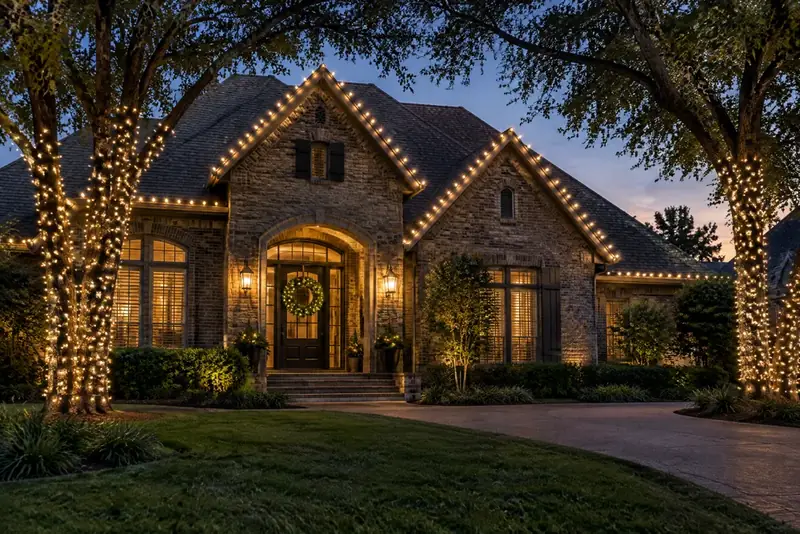
Next, choose one visual anchor. It might be the entry, a small tree, a window grouping, or one standout planter. A supporting detail—such as a restrained roofline accent or a repeated color in a wreath—can connect the scene. Everything else can remain unlit. That open space gives the eye a place to rest and keeps the display from feeling squeezed into the property line.
Three plans for compact front yards
1. Townhome-sized: make the facade the composition
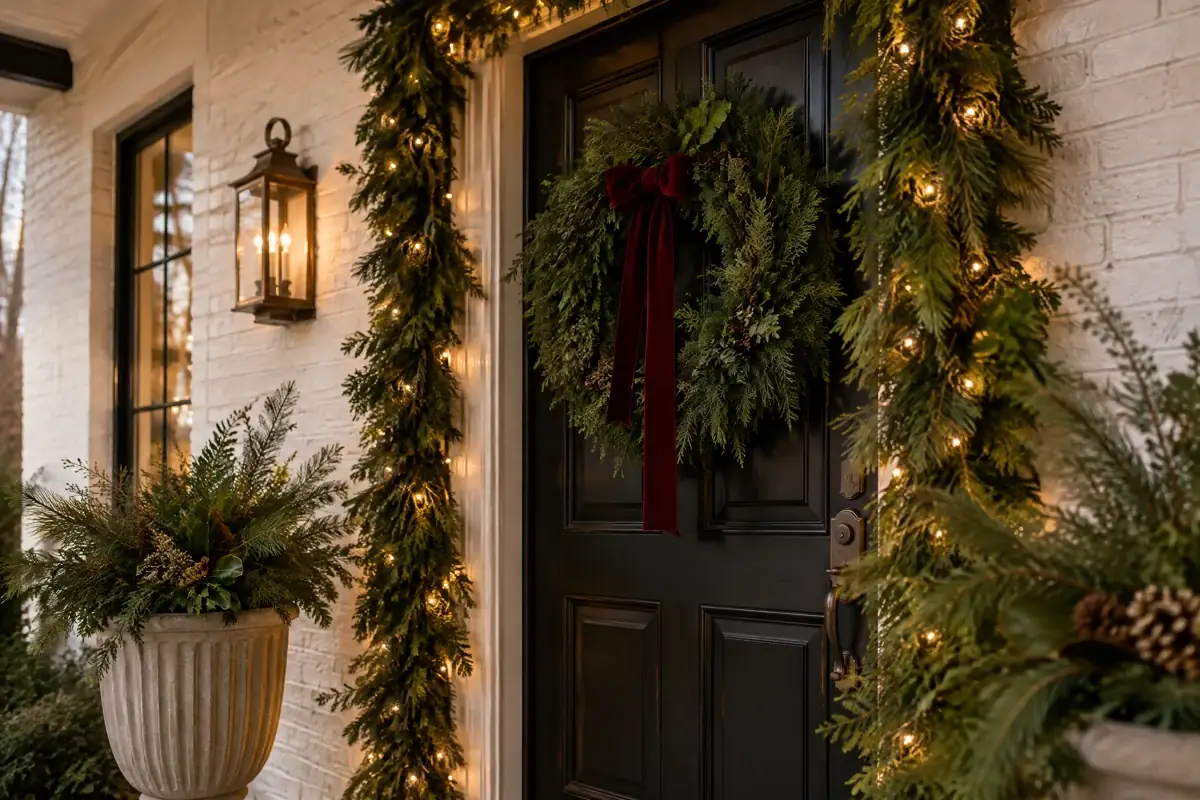
In a small townhome frontage, the house face may be the strongest feature, while the ground area is shared with a walk or neighboring doors. Let the entry or one front window be the focal point. For example, pair a softly lit doorway wreath with a single matching accent at the window, then leave the narrow planting bed mostly dark. If a short roofline treatment is part of the look, use it as a quiet frame rather than adding a second competing pattern.
Think in terms of the portion of the facade that belongs to your entry, rather than trying to visually claim the whole row. A tight palette and a little breathing room help distinguish your home without spilling light into a neighbor’s windows.
2. Narrow yard: use one visual line
A long, narrow strip can feel even tighter when every edge is outlined. Instead, choose one line to guide the eye toward the door: a few selected shrubs in a consistent treatment, or a simple entry-to-gate rhythm if the route remains unobstructed. Avoid alternating bright features on both sides of a narrow path; that can make the space feel busy and compete with clear wayfinding.
For instance, if the entry is already visible, emphasize one shrub near it and leave the rest of the planting strip dark. If the home has a strong vertical feature, such as a column or tall evergreen, a modest accent there may do more than a row of small decorations. These are design options, not fixed spacing rules—the plants, facade, and viewing distance determine what feels balanced.
3. Shallow yard: choose a foreground feature
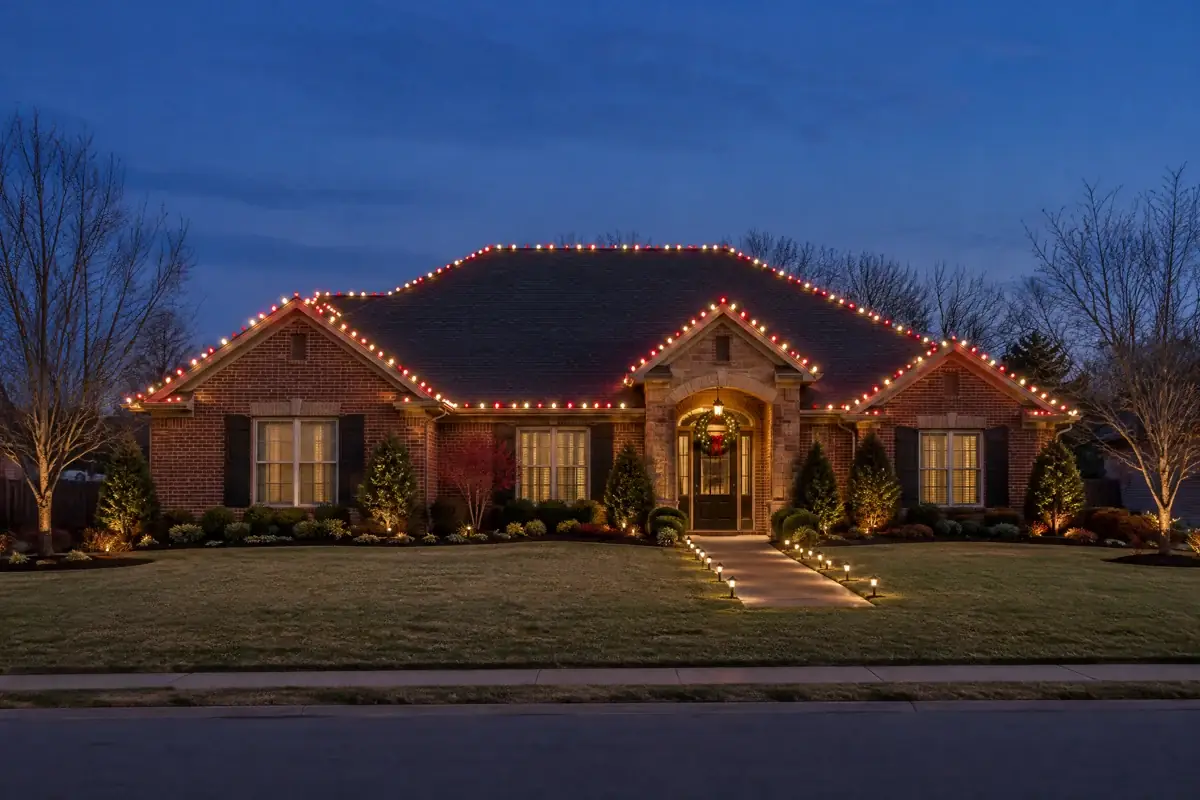
When there is little depth between the sidewalk and house, use one focal object with a clear outline: a small tree, a substantial planter, or a simple grouping near—but not in—the entry zone. Give it enough visual space around it to read as one feature. A second bright object immediately beside it can make a shallow yard look cluttered; a related detail on the house can connect the two without filling the whole foreground.
Before committing, look at the arrangement from the sidewalk and from the doorway. A display that looks balanced close up may merge into a bright patch from across the street. Adjust the number of elements and their relative scale, not just brightness.
Use a quick editing test
Take another ground-level photo or make a simple sketch, then ask: What do I notice first? Is there a clear path to the door? Can I name the one focal point? Is there a dark, quiet area that lets it stand out? If the answers are unclear, remove one element and look again. Try the composition in daylight too, so cords, supports, and daytime clutter do not become the unintended centerpiece.
Neighbor views matter in a compact setting. Check the display from the sidewalk and from nearby windows where practical. Aim lights toward the feature you want to see rather than toward a neighbor’s glass, and use a schedule that suits the household and shared setting. Do not assume the brightest option is the most visible or welcoming.
Keep the plan practical and safe
Before decorating, check product labels and instructions for outdoor suitability, and inspect light strings and cords. CPSC advises using lights certified for outdoor use outside, discarding damaged sets, and using outdoor electric decorations on GFCI-protected circuits; ESFI likewise recommends outdoor-marked cords and decorations, inspection, and keeping cords clear of standing water. Follow the product’s ratings and directions rather than relying on a generic number of connected strings.
Plan power access so a cord does not cross a walking route, become pinched in a door, or sit where people can trip. Use only supports and methods suited to the product and surface—never improvise a mounting method that could damage the cord. Turn decorations off when leaving home or going to sleep. If equipment is damaged, wet inside, unusually hot, smells burnt, or repeatedly trips a protective device, stop using it and seek qualified help.
A useful small-yard checklist is simple: one focal point, one supporting detail at most, a clear route, a neighbor-aware viewpoint check, and products used as labeled. If you want help translating a compact frontage into a restrained plan, explore residential Christmas light installation.
Sources: CPSC holiday decorating safety guidance and ESFI outdoor decoration safety tips.
Sources
Explore Residential Christmas Light Installation.
See the service overview, then tell us what you are considering for your property.