Frame the entrance without overwhelming it.
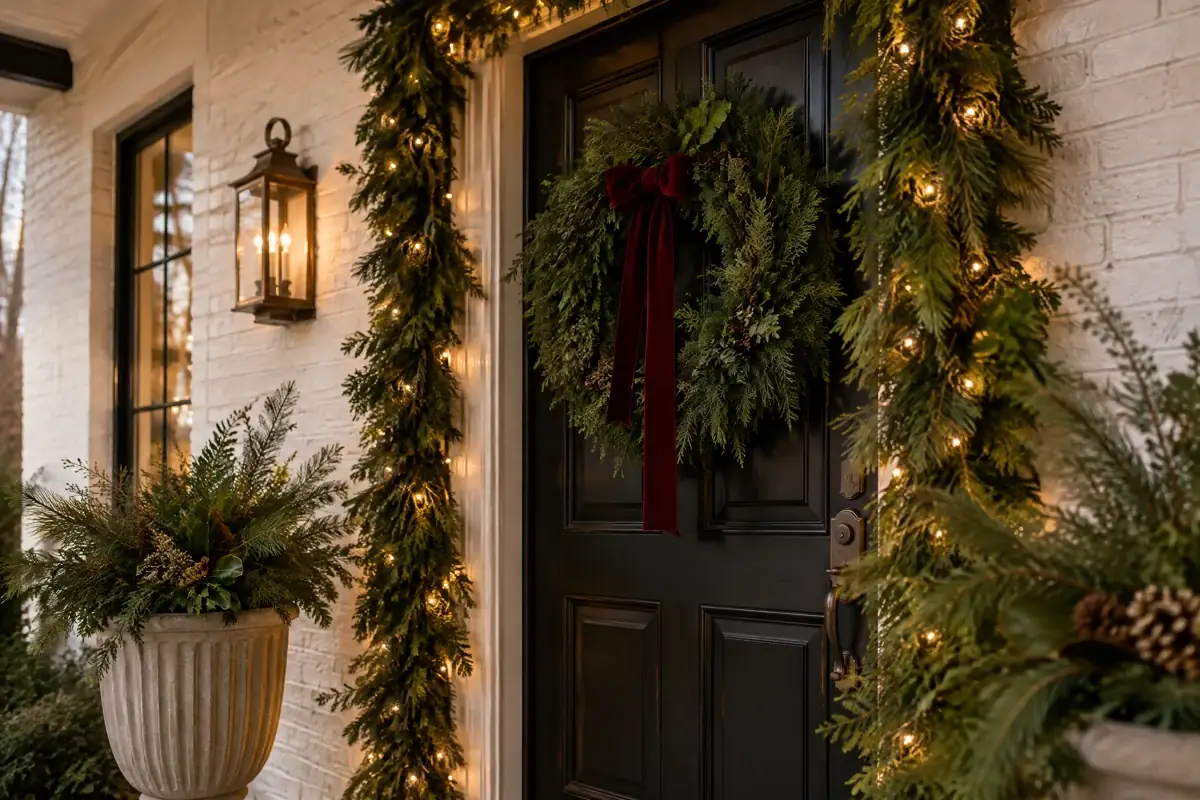
Wreaths and garland bring texture as well as light. The scale should suit the door, columns, railing, or entry you are decorating. A large wreath can anchor a broad facade, while a smaller entry may need only a few well-placed details. Think about the view from the driveway as well as the close-up experience at the door.
During your consultation, discuss how much greenery you want, the preferred light color, and any ribbon or color accents. We also need to consider clearance around doors and the available attachment surfaces. The aim is a welcoming entrance that remains practical to use throughout the season.
- Front-door and facade wreaths
- Illuminated garland at selected entries
- Coordinated accents for existing roofline designs
Bring trees into the design intentionally.
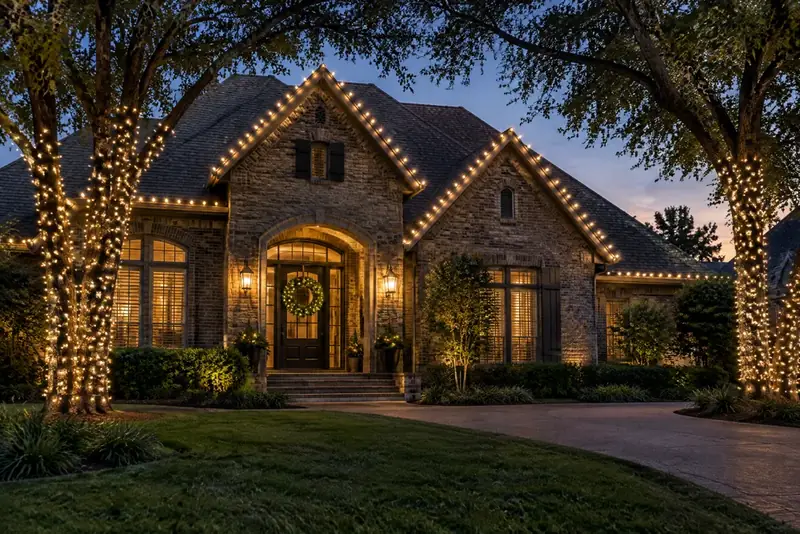
Tree lighting can emphasize a strong trunk, add depth behind a roofline, or make a walkway feel more inviting. The result depends on the tree’s size, shape, and the parts you want illuminated. Trunk wrapping and extending lights into branches are different scopes, so it helps to describe your preferred look rather than simply asking for a tree to be lit.
Access and suitable power also matter. Share a ground-level photo of the tree and its surroundings, including any fences or nearby paths. There is no need to climb the tree or take measurements from a ladder. We will discuss what should be evaluated before the final design and installation scope are agreed.
Make accents work with the rest of the property.
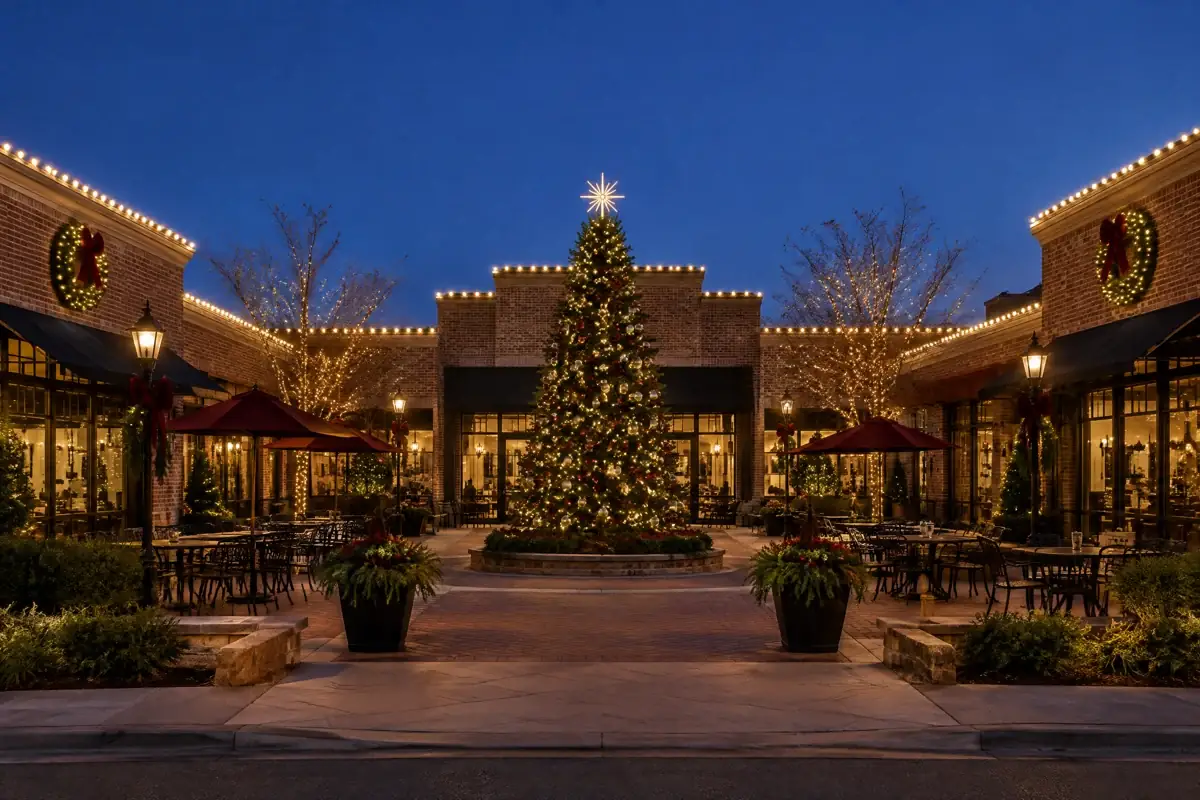
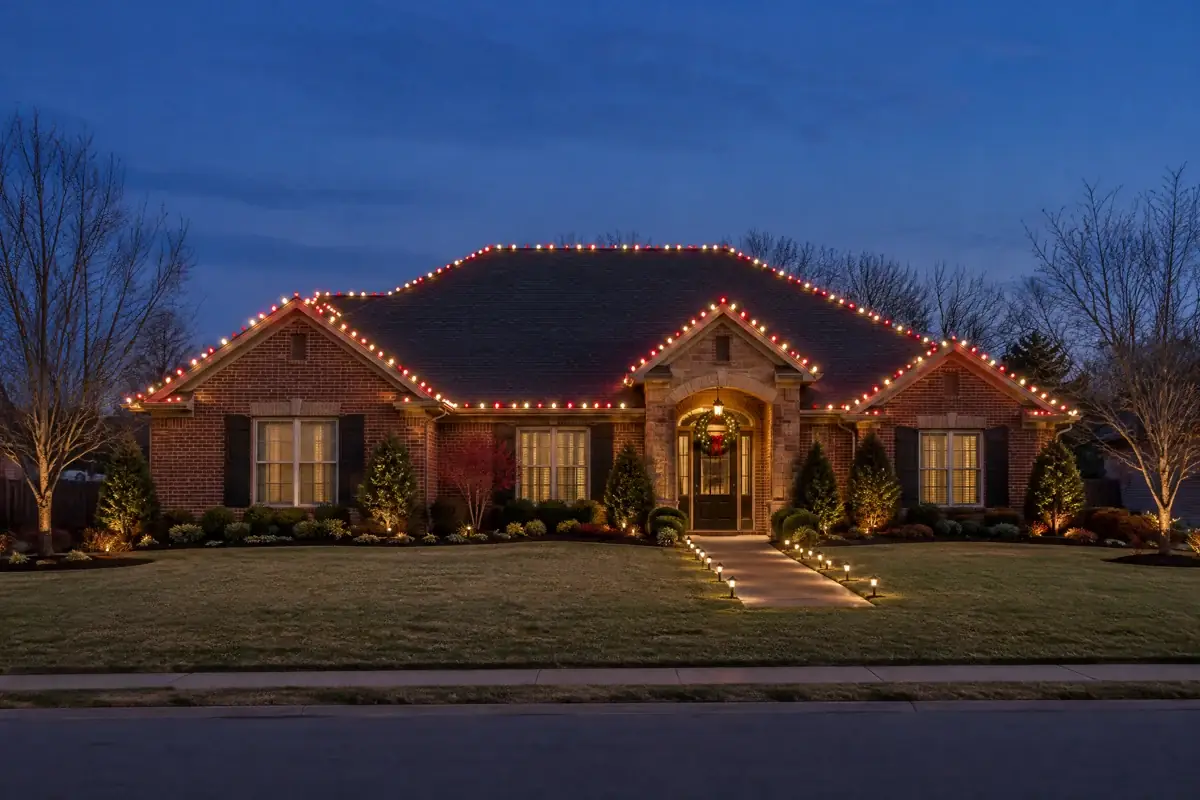
A consistent light color and a small number of focal points help rooflines, greenery, and trees feel like one display. You may choose a bright entrance and simpler landscaping, or make a single large tree the centerpiece. More lights are not always the answer; placement and balance can make a smaller design feel considered.
Tell us what decorations you already have and what you want to add. Existing materials need to be reviewed rather than assumed compatible. Your quote should identify the selected areas, proposed details, and any removal or seasonal support arrangements, so additions do not become surprises later.
Let’s plan your lighting.
A few details about your property are all you need to start.