On this page
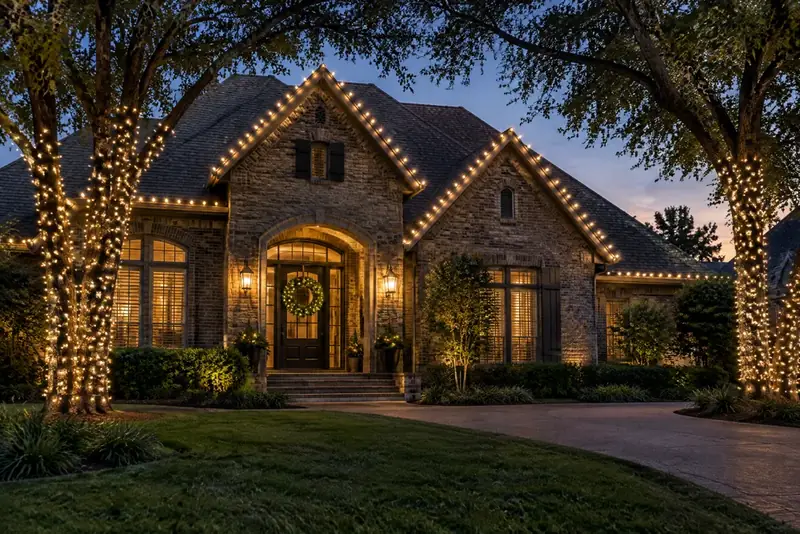
Modern Christmas lighting does not require a bare facade or a complicated installation. The minimalist approach is about editing: choose a few deliberate elements, align them with the home’s architecture, and give each one room to read. A clean roofline, a pair of softly lit entry evergreens, or a single window detail can feel more composed than decorating every edge.
Start with the architecture
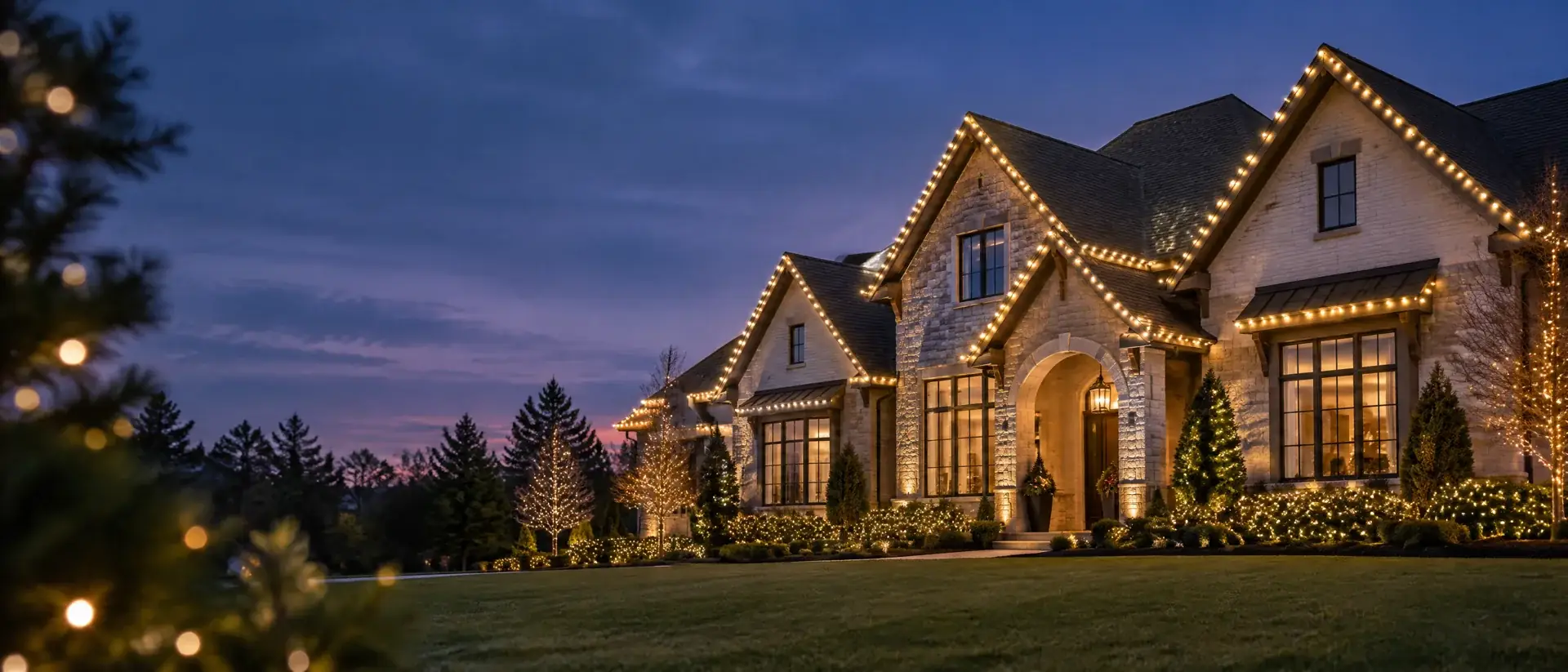
Look at the house from the place guests will first see it, then identify one natural line or focal point: a front entry, a porch beam, a prominent gable, or a row of evenly spaced windows. Pick the feature that already gives the facade structure. Make that the lead element; treat the rest as supporting space rather than a checklist of surfaces to fill.
For a home with strong horizontal trim, a single crisp line along a selected edge may emphasize its geometry. On a more traditional facade, a restrained entry treatment—such as matching light accents at the door and nearby planters—can feel current without trying to turn the whole house into a blank modernist composition. These are design choices, not rules: choose the line that looks intentional from the street and from your own windows.
A useful test is to take a ground-level photo and mark the proposed lighting on a copy. If several competing outlines appear, remove one. Avoid planning from a dramatic close-up alone; a display should make sense at its ordinary viewing distance.
Repeat one motif
Repetition creates order. Select a simple shape or treatment and use it in a few places: matching warm points in two entry planters, identical wreath lights on paired windows, or one consistent outline on a porch and its steps. The repeated element links the composition, while a single focal feature—perhaps the doorway—keeps it from feeling like a pattern with no center.
Keep spacing and scale visually consistent where elements are meant to match. If a home has asymmetrical windows, do not force identical decoration onto every opening; instead, repeat the same small accent only where it supports the architecture. Modern minimalism is not symmetry at all costs. It is the sense that each choice belongs to the same plan.
Limit the palette, then add texture
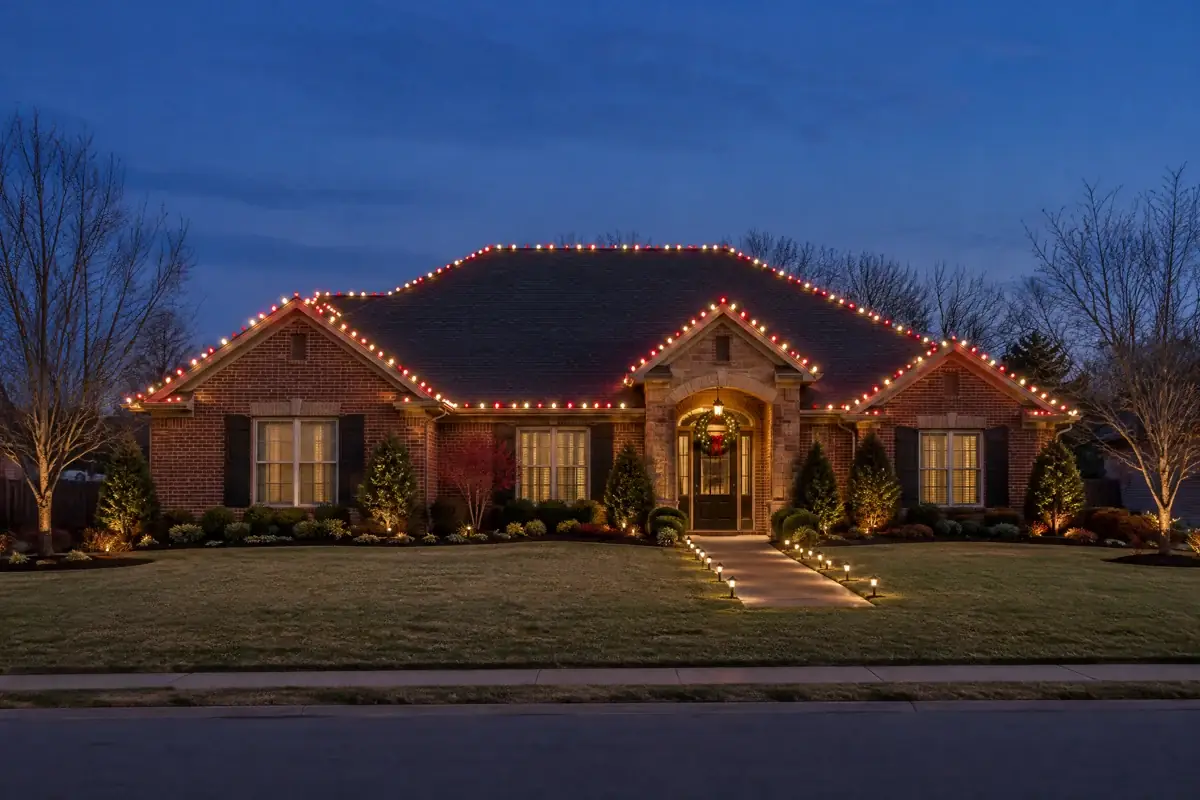
Start with one light color and, if desired, one accent. A warm-white line with natural greenery can feel calm; cool white with a restrained metallic accent can read sharper; a few red details can introduce holiday character without adding a second full lighting scheme. Treat these as visual options, not universal color-temperature prescriptions—bulbs and surfaces can look different in person than they do on a screen.
Before committing, compare a small sample against the home’s exterior and existing porch lights after dusk. Check it from the street as well as close up. If the accent color competes with the architecture or makes the focal point unclear, remove it. Texture can supply variety without more colors: greenery, a matte wreath, or a simple natural container can keep a limited palette from feeling flat.
Use darkness as part of the design
A minimalist display needs unlit areas. Leaving most windows, walls, and landscaping dark gives the chosen features contrast and helps the eye settle. For example, a lit entry and one architectural line can be enough; adding lights to every shrub may dilute both.
Step back and ask what you notice first. If your eye jumps among unrelated outlines, animated effects, and color changes, edit until there is one clear focal point and a supporting rhythm. The goal is not the fewest possible lights; it is a display in which each light has a reason to be there.
Think about the daytime view
During daylight, clips, cords, and unlit strands can be more visible than the lighting itself. When feasible, plan a neat route along existing edges and choose suitable, manufacturer-approved attachment methods that do not damage the home. A ground-level photo in daylight can reveal loose loops, conspicuous hardware, or a path that crosses a view you wanted to keep clean.
Do not improvise fasteners or climb to reach a difficult spot. If a high roof edge, awkward access, or mounting question is part of the plan, leave that work to qualified installers. You can discuss a restrained concept and the relevant areas through Lighting Up Oklahoma’s residential Christmas light installation service.
A quick minimalist design checklist
Before choosing the final layout, confirm that you can answer yes to these questions:
- Is there one obvious focal feature, with other surfaces intentionally left quiet?
- Does one motif repeat in a way that fits the home, rather than being forced everywhere?
- Can the palette be described in one short phrase, such as “warm white and evergreen”?
- Does the concept look composed from the street and from the main indoor viewpoints?
- Have you considered how cords and attachment hardware will look during the day?
- Are doors, exits, handrails, and ordinary walking routes left clear?
Keep the plan safe as well as simple
Minimal styling does not change electrical precautions. Use lighting only in locations and conditions allowed by its labeling and instructions, and visually inspect lights and cords before use. NFPA notes that damaged sockets and cracked cord covers can expose electrical hazards; if equipment is damaged, water has entered it, it overheats, smells burnt, or a protective device trips repeatedly, stop using it and seek qualified help. Do not work on energized equipment or bypass a protective device. For outdoor displays, have appropriate GFCI protection; NFPA advises using a qualified person if exterior receptacle protection needs to be installed. See NFPA’s holiday electrical safety guidance.
The most successful modern holiday scheme is often the one you can describe simply: one clear line, one repeated detail, a restrained color choice, and plenty of breathing room. Make those decisions before you add more, and the result can feel intentional without filling every surface.
Sources
Explore Residential Christmas Light Installation.
See the service overview, then tell us what you are considering for your property.