
On this page
Thanksgiving and Christmas are close enough that decorating twice can feel like a second job. The easier approach is to keep a calm, reusable foundation and change a handful of details that make the room feel unmistakably ready for the next gathering. Think less “start over” and more “edit”: one color shift, one refreshed focal point, and a quick reset of the surfaces guests use.
Begin with a base that can bridge both holidays
Before putting anything away, look for pieces that already feel seasonal without being tied to Thanksgiving: a natural-texture runner, a simple bowl, a neutral throw, a wreath form, or greenery that still looks fresh and is safe to keep. Those pieces can stay while the details around them change.
Pick a compact palette for the Christmas layer. For example, keep linen, wood, or evergreen as the quiet base, then add cranberry red and warm metallic accents; or pair evergreen with cream and a few playful ornaments. These are design options, not rules. Repeating the same two accent colors in a couple of visible places usually feels more intentional than adding a new color to every surface.
Make a three-stop transition
A short sequence helps prevent the “everything is out at once” stage: start with the entry, refresh one gathering area, then finish the table or mantel. You do not need to decorate every room.
- Entry: Keep a plain wreath or greenery as the anchor and switch a seasonal ribbon or small accent. Leave the door swing, steps, handrail, and walking path clear. If a fresh entry wreath or greenery is part of your plan, see wreaths, garland, and tree wrapping.
- Gathering space: On a mantel or console, remove Thanksgiving-specific pieces and group a few Christmas accents around one central element. Try a small cluster of ornaments beside greenery instead of spreading individual items across the whole ledge. Keep decor stable and away from heat sources.
- Table: Clear the Thanksgiving centerpiece before setting out holiday dishes. A low bowl with a few ornaments or a short greenery runner can add a seasonal cue without taking up serving space. For dinner, move decorative pieces off the table if platters, place settings, or guest comfort need the room.
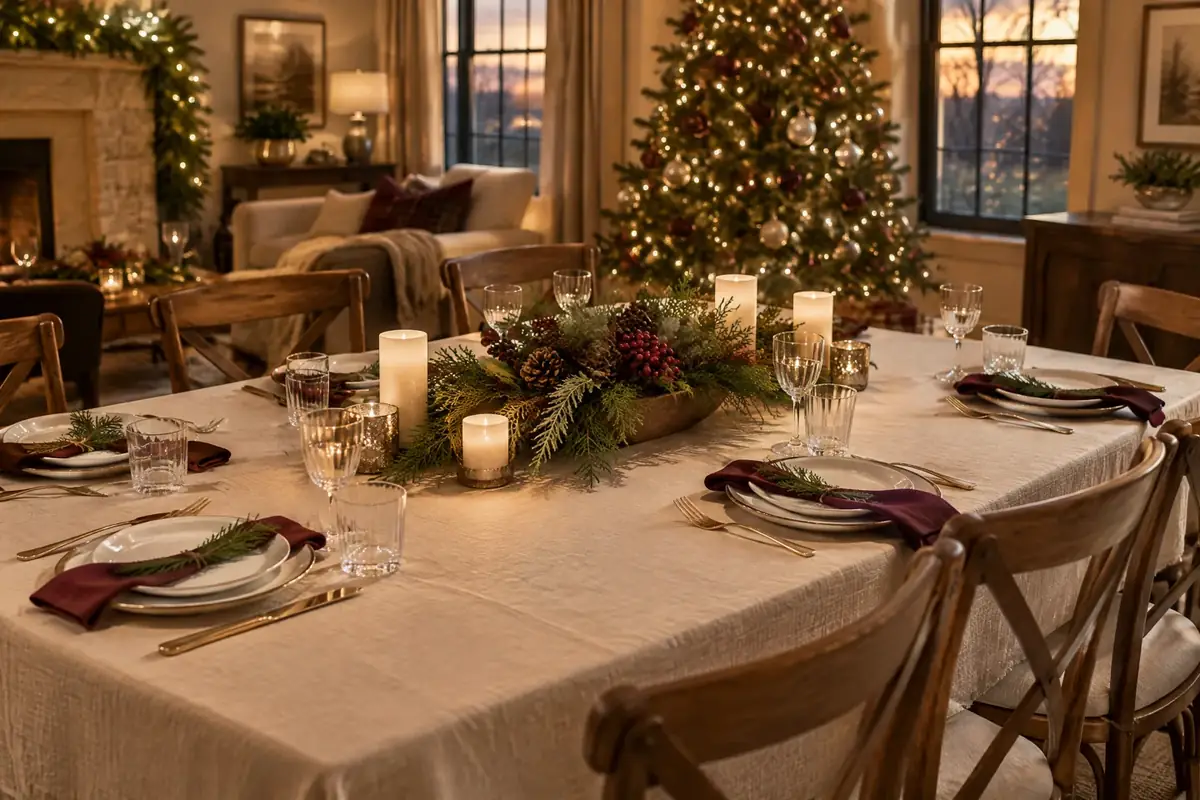
A specific example: leave a neutral runner and simple candleholders on the dining table, but replace autumn-colored napkins with deep green ones and add a small bowl of ornaments. If you use candles, keep them well away from anything that can burn and place them where they cannot be knocked over; battery-operated flameless candles are another option.
Stage the swap before you pack away fall
Set aside one basket or box for the Christmas accents you expect to use in the main rooms. As you remove Thanksgiving-only pieces, give them a quick visual check, group them by location, and put them in a labeled container rather than creating a mixed holiday bin. A note such as “entry,” “table,” or “mantel” makes next year’s setup easier, too.
Take a quick phone photo of each area before packing it away. The picture is a simple reminder of what you actually used—and what you can skip next season. Keep fragile pieces and small decorations out of children’s reach, and make decorating a family activity by letting kids choose between two safe accent options or sort soft, non-breakable items. Adults can handle placement of anything fragile, electrical, or near a heat source.
Keep the room welcoming as the decor changes
A seasonal refresh should not make the home harder to move through. Before calling a room finished, walk the usual route from the entry to seating and dining areas. Check that decorations do not narrow a passage, block an exit, interfere with a usable handrail, or create a cord across a walking route. If you put up a Christmas tree, the U.S. Fire Administration advises keeping it at least three feet from heat sources and making sure it does not block exits. It also recommends following the manufacturer’s instructions for how many light strands to connect. Read its holiday fire-safety guidance before setting up.
For lights or illuminated decorations, inspect them before use and follow their labels and manufacturer instructions. Do not use a damaged strand. If anything becomes hot, smells like burning, gets wet inside, or repeatedly trips a protective device, stop using it and seek qualified help rather than trying to repair it.
A simple finish-line checklist
- Keep the pieces that work in both seasons; remove only the unmistakably Thanksgiving-specific accents.
- Refresh two or three focal spots instead of buying or displaying a whole new collection.
- Put fall decor together in labeled storage and stage Christmas accents in one easy-to-find container.
- Check routes, exits, heat sources, and product instructions before guests arrive.
The best transition is one that leaves you time to enjoy the people coming through the door. A small, thoughtful edit can make the house feel ready for Christmas without turning the week after Thanksgiving into another major project.
Sources
Explore Wreaths Garland Tree Wrapping.
See the service overview, then tell us what you are considering for your property.