On this page
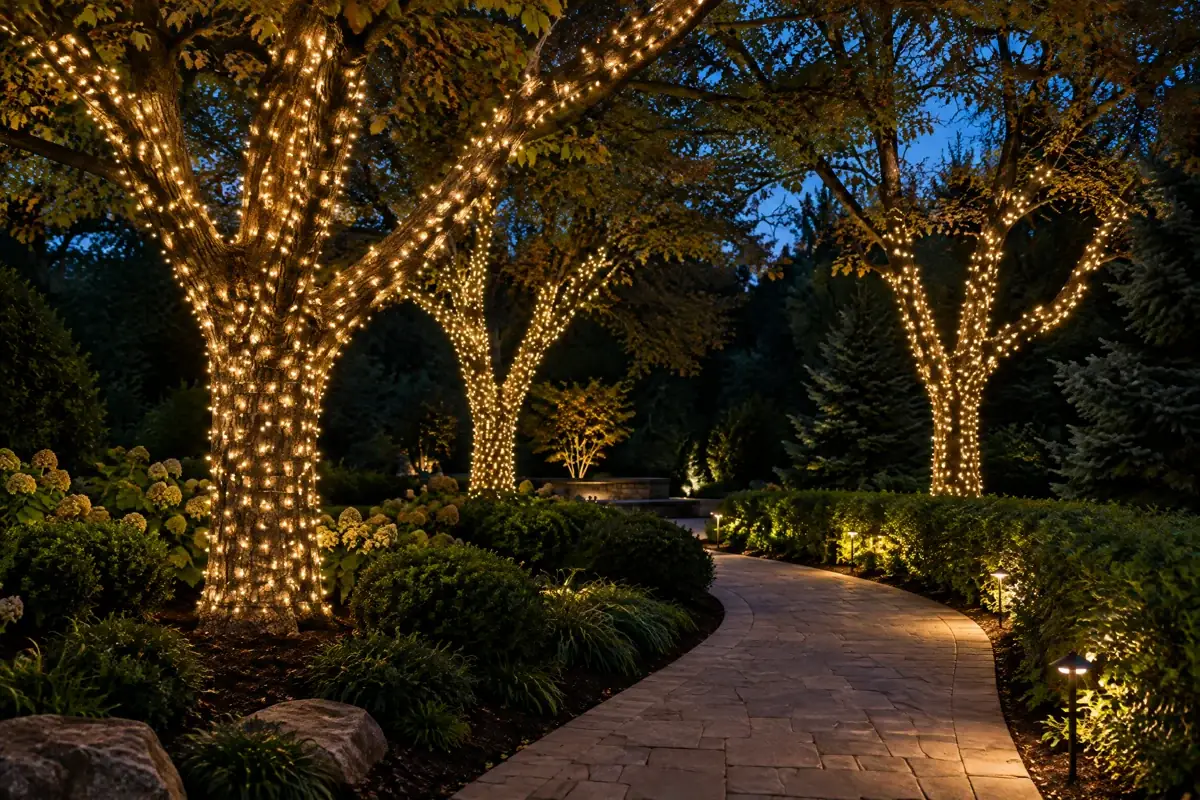
The best holiday welcome starts before the wreath or twinkle lights come into view: guests should be able to tell where to walk. Plan the route from the driveway or sidewalk to the door first, then add seasonal light around it. A simple rule helps: make the wayfinding clear, and let decoration be the accent.
Plan the route before the display
Walk the guest approach in daylight and note its turns, steps, changes in surface, and the place where someone will pause to open the door. After dark, check the same route from a guest’s viewpoint. Look for a visible connection between the arrival point, the path, the landing, and the entrance—not just a bright centerpiece at the end.
Keep functional illumination and decorative lighting in different roles. An existing porch or entry light can help reveal the door, landing, and nearby edges; decorative strands or glowing figures can add atmosphere around that route. Don’t count on a string of holiday lights alone to show where feet should go. If an area remains difficult to see, reconsider the layout or ask a qualified lighting professional about suitable functional lighting rather than simply adding brighter decorations.
For example, on a driveway-to-front-door route, first identify the walkway’s edge and any step or turn. Then place seasonal accents beside the route, where they help point toward the entrance without occupying the walking surface. A clear, modestly decorated path is often easier to follow than a densely outlined one.
Keep cords out of the walking line
Holiday cords can undo a good lighting plan if they cross the path. Route decorations so cords do not lie across walkways, doorways, stairs, lawns, or other busy areas. The National Park Service specifically cautions against running extension cords across doorways, lawns, or high-traffic areas. Avoid hiding a cord under a mat or runner: it can be harder to notice and may be pinched or damaged. If a layout requires a cord to cross where people walk, change the layout instead of treating tape or a cover as a reason to leave the crossing in place.
Keep freestanding decorations, stakes, and lighted figures outside the route, too. Check the full approach—not only the center of the path—for door swing, a place to set down a package, and room to use any handrail. Keep exits and the usable path to them clear. The National Park Service’s holiday-light guidance also advises keeping cords out of doorways and high-traffic areas and clearing exits of decorations.
Choose for outdoor conditions, not just appearance
A product that looks right in a store or indoors is not automatically suitable for an exposed walkway. Read the label and manufacturer’s instructions for where a light set and any extension cord may be used; use outdoor products only in the conditions specified. The CPSC’s holiday decorating guidance says to check that lights are certified for outdoor use before using them outside and to use extension cords rated for their intended use. It also recommends GFCI-protected circuits for outdoor electric lights and decorations. If you are unsure about an outlet or protection, consult a qualified electrician rather than modifying electrical equipment yourself.
Before putting a set into service, look for damage such as frayed or pinched wires, cracked sockets, or loose connections. The U.S. Fire Administration recommends inspecting holiday lights each year and following the manufacturer’s instructions, including strand-connection limits. Don’t substitute a generic strand count for the instructions supplied with the specific product.
Check glare and access at night
A display can be festive without shining directly into someone’s eyes. Stand where a visitor will approach and check whether a bright source makes the path, step, or door harder to make out. Aim or reposition decorative accents so they frame the entry instead of facing into the approach, a neighboring window, or a driver’s view. This is a visual-design check, not a substitute for enough functional illumination.
Do one final walk-through after the display is on. Confirm that the path still reads clearly, cords and decorations remain outside it, the door opens fully, and handrails and exits are usable. Recheck after moving anything or after weather affects the setup. If equipment is damaged, has water inside, feels hot, smells burnt, or repeatedly trips a protective device, stop using it and seek qualified help; don’t try to repair it or bypass protection.
For a seasonal lighting plan that keeps the entry route in view, explore residential Christmas light installation.
Sources
Explore Residential Christmas Light Installation.
See the service overview, then tell us what you are considering for your property.